

Emerging Trends You Need to Know
The rapid advancement of artificial intelligence (AI) has prompted many to ask: “How will this impact my industry?” Not long ago, creative fields were considered relatively safe from AI’s reach. However, with tools like Midjourney, DALL·E, and Deep Dream Generator, it’s clear that the creative landscape is undergoing a dramatic shift.
So, what does this mean for the future of branding? Let’s explore the key trends reshaping brand strategies by 2030.
Hyper-Personalization Through AI
Personalization has been part of marketing for years. We’ve all browsed an online store and then been “followed” by related ads—but by 2030, AI will take this to an entirely new level.
Imagine AI not just recommending products, but tailoring entire experiences based on your behaviours, location, and even your past purchases. For example, someone who just moved into a sleek city loft might see product suggestions for minimalistic branding displays or muted tones that align with their style and space.
According to a 2021 McKinsey report, 71% of consumers expect personalized interactions, and 76% feel frustrated when they don’t receive them.
This trend makes it crucial for brands to not only collect better data—but to use it in meaningful, non-intrusive ways.
Experiential Marketing & Immersive Brand Activations
In a world that’s becoming increasingly digital, real-life experiences are now premium. Experiential marketing allows brands to build direct emotional connections with consumers—through tactile, memorable moments.
Take IKEA’s “Sleepover” event, where fans were invited to spend the night in a fully furnished store. Guests enjoyed:
•Massages, movies, and midnight snacks
•Sleep advice from specialists
•Take-home goodie bags with products

Customers at an Ikea Sleepover Event
Within these experiences, traditional branding assets still shine. Tools like pull-up banners, banner walls, and A-frames play a vital supporting role in directing attention and reinforcing key messages.
The Rise of Sustainable & Ethical Branding
Sustainability is no longer a competitive edge—it’s an expectation. According to an IBM x NRF report, 66% of consumers are willing to pay more for sustainable goods.
That means brands in 2030 won’t just need eco-friendly products—they’ll need transparent, ethical operations across the board.
At Brand Monster, we’re proud to use recycled materials (like eco-PVC made from repurposed plastic bottles) in many of our printed solutions. You’ll find these details clearly outlined on our product pages, under the “Additional Information” tab.
Community-Driven Branding Replaces One-Way Marketing
As trust in advertising declines, consumers are gravitating toward brands that invite them to participate, contribute, and collaborate.
Whether it’s submitting a product design, voting on packaging, or joining a niche community, people want more than a product—they want a voice.
Companies like LEGO, Sephora, and Nike are leading the charge, but by 2030, even smaller brands will need to adopt this co-creative mindset.
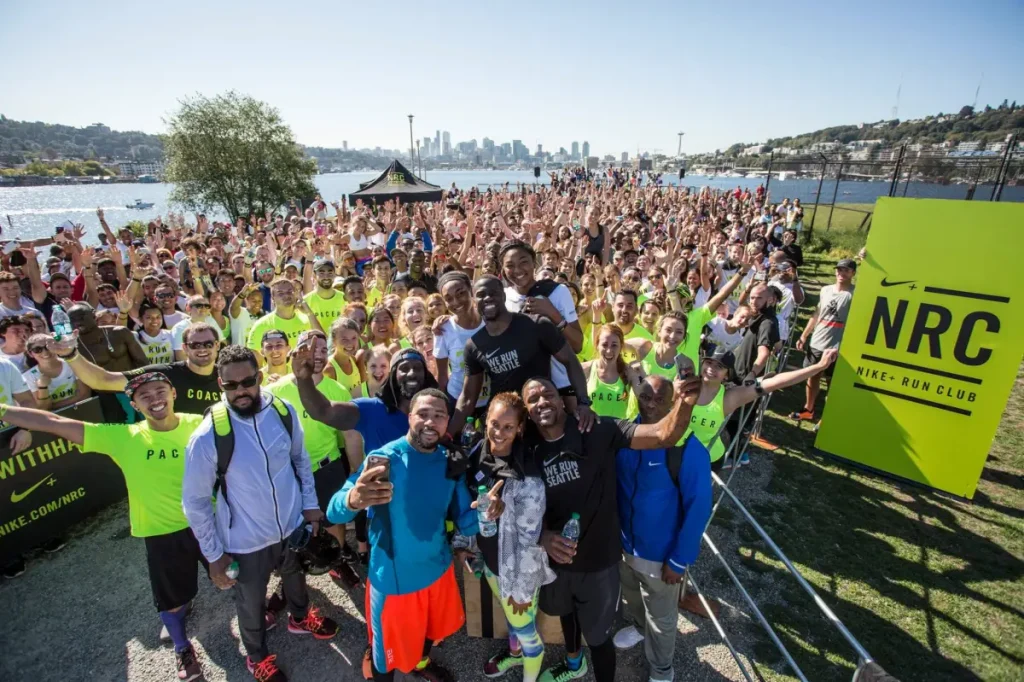
Runners and organizers at a Nike Run Club Event
Future-Proof Your Brand
Tomorrow’s most successful brands will be:
•Personalized
•Immersive
•Transparent
•Community-led
Timeless branding meets the future
While these emerging trends shape where branding is heading, the world’s most iconic brands — like Apple, Nike, and Harley-Davidson — prove that great branding has always been about emotional connection, not just technology.
Discover how these brands built their magic in our feature: The Magic Behind Iconic Brands.
At Brand Monster, we help brands like yours rise to meet the challenge—with custom solutions like branded gazebos, sock banners, and teardrop banners built for modern event environments.
🧠 Frequently Asked Questions
1. What are the biggest branding trends for 2030?
By 2030, branding will be shaped by hyper-personalisation through AI, immersive experiences that blend physical and digital worlds, sustainability as a core brand value, and community-driven co-creation. Successful brands will feel alive — constantly learning from data and adapting to their audience’s values.
2. How will AI influence branding in the future?
Artificial intelligence will enable brands to predict customer needs, personalise experiences in real-time, and generate creative assets faster than ever. From AI-powered design to predictive marketing, AI will make brand interactions more relevant, efficient, and human-centred.
3. Why is sustainability becoming essential to brand identity?
Consumers increasingly expect brands to act responsibly — from eco-friendly packaging to ethical sourcing. By 2030, sustainability won’t be a selling point; it will be a baseline expectation. Brands that ignore it risk losing trust and relevance.
4. What does ‘experiential branding’ mean?
Experiential branding focuses on creating immersive, memorable experiences rather than just displaying logos. Think pop-up activations, interactive displays, and branded environments that engage all the senses — something we help bring to life through event branding and custom-printed display solutions.
5. How can small and medium businesses prepare for these trends?
Start by aligning your visual branding and marketing materials with your values — sustainability, inclusivity, innovation. Investing in flexible, reusable branded assets like gazebos, banners, and signage ensures your brand stays visible and adaptable across events and environments.
6. How will consumer psychology shape branding by 2030?
Brands will need to connect emotionally, not just visually. The most successful ones will understand and mirror the inner motivations of their audience — such as belonging, purpose, and authenticity — rather than relying solely on product features or discounts.
7. What technologies will drive the next decade of branding?
Emerging technologies like augmented reality (AR), virtual reality (VR), blockchain for brand authenticity, and AI-driven content creation will all play key roles. Together, they’ll redefine how brands build trust, create engagement, and measure impact.
